






5 Things that should not be in your workout
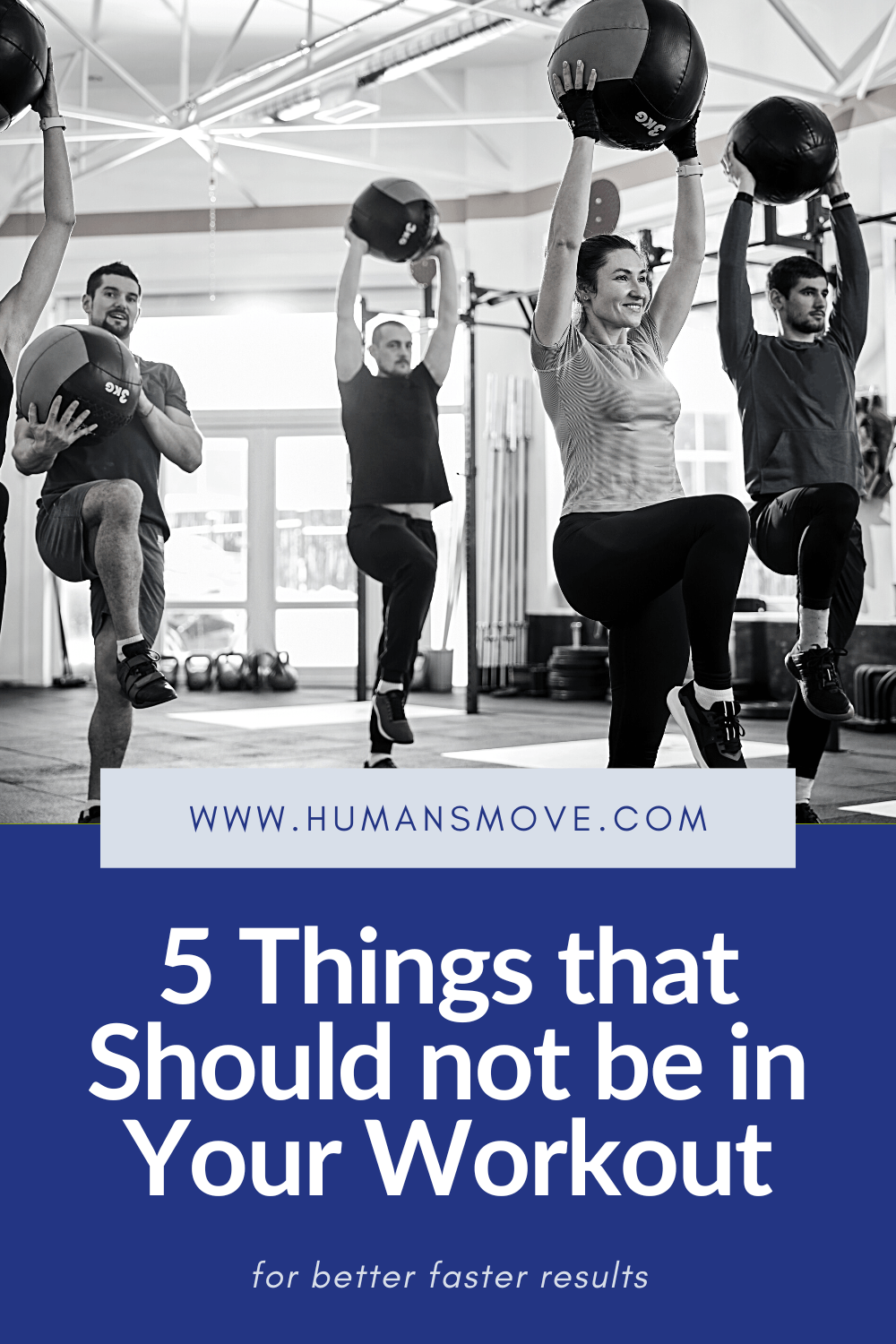
There is a lot of information out there that tells you what to include in a workout, but, do you know what should not be a part of your workout? I am often surprised when I am talking to someone new about exercise and I find that they are unaware of some or all of these things. I have been doing this a long time and it is easy to overlook that what is obvious to me, but, might be a piece of information that could change your life. Without further ado:
1. Pain
This is the most important thing for you to know. I don’t care how minor the pain seems, if you keep working out in a way that causes or triggers pain, you will pay the price in some way down the road. I don’t want that for you!
When I work with a new client, I talk a lot about pain, discomfort and what is normal and safe to feel during a workout. It astounds me how many people do not know what is normal discomfort of challenging your body in a healthy way versus pain that they should not work through.
More often than not, when caught early on, pain can be avoided without avoiding the exercise that triggered it! This is where having an expert can be very helpful. If you are experiencing something you would like to gain a little more clarity on, drop a comment below, let’s see if I can help you troubleshoot.
2. Complicated exercises
If you are just starting out, a general rule of thumb is that you should not be doing exercises that are involving multiple body parts all at once. As you build a healthy foundation of strength and mobility, you can begin to take on more complex exercises. This is not just for beginners, however. Though we do advance and all of our body’s systems adapt and become more efficient, we are not robots. I have been working out most of my life and I still come back to workouts that are simple. All of the things of life effect all of our body’s systems. If you are having a challenging week in some way and also not getting rest, testing your nervous system with complex tasks may very well cause an injury. There are many ways to challenge yourself. Remember to challenge yourself as you are right now. Don’t plan your workout based on your ideal self. This will not speed up progress. It slows it down and increases your risk of injury.
3. Your workout should not deplete your energy
Exercise is a stressor. It can be good or it can wreak havoc on your health. None of your workouts should empty the tank. You should always be able to go about your day without skipping any of your plans. The more intense your workout is, the more rest you need in between.
4. Too many different exercises in one workout
I know it is really easy to have bright shiny object syndrome with all the information you have available at your finger tips. You find the best exercises for all of your “trouble” areas and you want to fit them all into your workout. This is not necessary and is less effective. You will experience better results if you do fewer exercises with better focus.
5. Weights/Resistance that is too heavy
If you struggle with the weight that you choose to use during your workouts, the workout will be less effective than it could be and you are putting yourself at risk for injury and chronic pain. Choose weight that is challenging, but, you’re able to do it without getting sloppy and having body parts that are not supposed to be part of the movement get involved.
I used to see this primarily with men at the gym. Over the last 10 years or so, I see it more often in women than I do in men. Back when I started my career it was near impossible to get women to lift 10# dumbbells without them asking you to sign in blood that it would not bulk them up. Then 10-15 years ago there began to be…a movement, if you will…that pushed the notion that women are as strong as men. Women are not as physically strong as men. Period. If you care about your joint health and what it will feel like getting out of bed in your 50’s, lighten up.
What area needs some adjusting for you? Can I help? Drop a question below.
If you want to go deeper into this topic, check out the free workbook I created below!
Free 3-Part Video Series: Before you Exercise: Check Your Breathing & Posture
Sign-up below to start building a rock-solid foundation today

Hey! If you’re new here…
I'm Rachel.
I'm here to help you connect with how your body is designed to move.
I take a longevity-first approach, whether you're a 15-year-old high school athlete or an 85-year-old gardener. I create programs that take care of your joints today and for decades to come.
Longevity, to me, is about the life in your years, not the years in your life.
I build programs that focus on what matters most: breathing well, moving well, and maintaining a rock-solid foundation your body can rely on—for life. Your life.
Movement for life
EXPLORE
CONNECT